

Newsroom
Pediatric Praziquantel Consortium Access Workshop in Kenya - March 2022
In addition to the successful workshop in Côte d'Ivoire in February, members of the Pediatric Praziquantel Consortium Access Team met once again in March for a two-day workshop in Nairobi, Kenya.
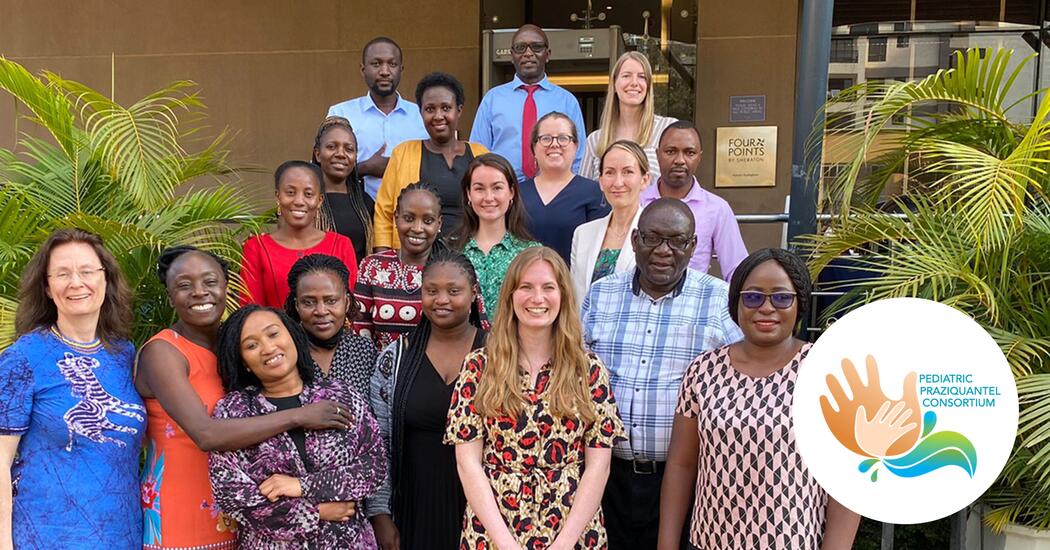
Following on from separate meetings in Kenya and Uganda last September, this joint workshop for the East African countries allowed for a more intensive exchange. The workshop marked the beginning of data collection for the social science study in Kenya and Uganda as part of the ADOPT program, launched in early 2021.
The workshop was hosted by the African Institute for Health and Development (AIHD) under the leadership of its founding Director and Technical Adviser Dr. Mary Nyamongo, principal investigator of the social science study in Kenya. Also present were Prof. Stella Neema, lead researcher from Makerere University School of Public Health in Uganda, and Prof. Andrea Winkler, lead researcher from the Technical University of Munich (TUM). The meeting was officially opened by Wyckliff Omondi, Head of Vector-Borne and Neglected Tropical Diseases at the Kenyan Ministry of Health.
In addition, representatives from the Kenya Medical Research Institute (KEMRI), the Kenyan Ministry of Health, the Ugandan Ministry of Health, TUM, and SCI Foundation (SCIF) participated. Dr. Sultani Matendechero, head of the Kenyan National Public Health Institute, also attended.
Key outcomes
During the workshop, a thorough review of the study districts for data collection by the NTD coordinators was completed. Preparations were also put in place for the fieldwork in Kenya and Uganda. In addition to this, participants discussed the dissemination of the social science study outcomes, which will serve as a basis for developing the social mobilization strategies for the distribution of the new pediatric treatment, arpraziquantel.
Next steps
The Access team plans to complete the data collection in Kenya and Uganda by June, and will then continue with the data analysis. Ultimately, this will inform the social mobilization, communication and training strategy, and the final selection of delivery platforms for pilot testing.